Iroko, Teak and Acacia: Which Wood for a Garden Swing?
All three hardwoods turn up in the garden swing market. They look similar, but there are real differences in density, natural oil content, outdoor lifespan and price. In this guide we compare each wood by its actual technical figures and its performance specifically for swings.
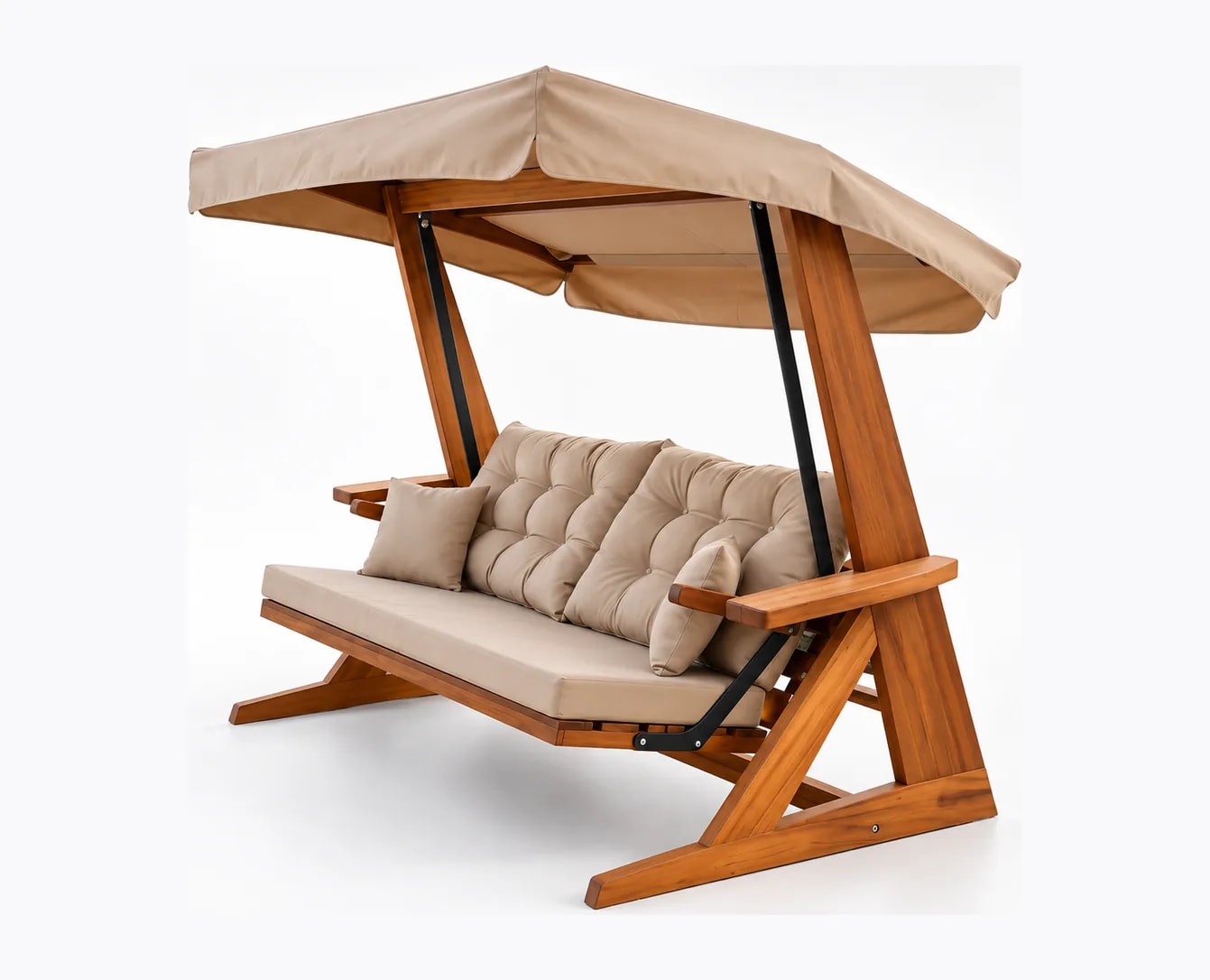
Teak is the most durable thanks to its very high natural oil content, but it costs 3-5× more. Iroko offers performance very close to teak with high dimensional stability and a Class 1-2 durability rating, at 30-50% lower cost. Acacia is very hard but the species vary widely and the outdoor cracking risk is higher. For a garden swing, the price/performance lead belongs to iroko.
1. Iroko (Milicia excelsa)
A hardwood from the rainforests of West Africa, also known in the trade as "African Teak". It entered the Turkish market strongly over the last 15 years, positioned as the natural alternative to teak: similar durability, a more reasonable price.
- Density: ≈660 kg/m³ (air-dried, 12% moisture)
- Janka hardness: 1,190 lbf (teak 1,070, oak 1,290)
- Durability class: Class 1-2 (EN 350) — very durable
- Natural durability: EN 350 Class 1-2 (resists fungi and insects)
- Natural oil: Low → performance rises with an external oil application
- Dimensional stability: High (radial shrinkage ≈3.3%)
- Colour: From light golden yellow to deep brown-amber
Why it suits a swing: Its natural durability (EN 350 Class 1-2) keeps fungi and insects away in the garden. Its dimensional stability prevents cracking in regions with large daytime temperature swings (e.g. Ankara, Kayseri). Once Italian teak oil is applied, surface performance competes directly with teak.
2. Teak (Tectona grandis)
A Southeast Asian plantation timber. The standard material for boat decks, luxury outdoor furniture and premier outdoor brands. Its high price comes from constrained supply.
- Density: ≈655 kg/m³ (air-dried)
- Janka hardness: 1,070 lbf
- Durability class: Class 1 (EN 350) — the top class
- Natural oil: Very high — needs no oil coating (oxidises to a grey patina)
- Dimensional stability: High (radial shrinkage ≈2.5%)
- Colour: Golden yellow → a natural silver-grey patina over time
- Price: ~2-3× iroko (per m³ for plantation teak)
Why it suits a swing but is rare: Top class in performance, but a 4-person swing rises to the 60,000-100,000₺ range. In practice few makers work with it at any volume.
3. Acacia (Robinia pseudoacacia and Acacia mangium)
“Acacia” is a broad family of species. Two are often confused in the Turkish market: Robinia (black locust — hard, durable) and Acacia mangium (an Indonesian plantation timber — lighter, cheaper). When a label says “acacia”, it is essential to know which species it actually is.
- Density: Robinia ≈770 kg/m³, mangium ≈580 kg/m³
- Janka hardness: Robinia 1,700 lbf, mangium 1,100 lbf
- Durability class: Robinia Class 1-2, mangium Class 2-3
- Natural oil: Low
- Dimensional stability: Medium — cracking tendency higher than iroko/teak
- Colour: Light yellow-gold → turns grey
The verdict for a swing: Robinia is genuinely a good choice, but few makers in Turkey produce swings from it. Acacia mangium, on the other hand, is used in most “cheap acacia swing” production — in garden conditions the surface starts cracking after 3-5 years. Check the Latin species on the label.
All three in one table
| Property | Iroko | Teak | Acacia (Robinia) |
|---|---|---|---|
| Density (kg/m³) | ≈660 | ≈655 | ≈770 |
| Janka hardness (lbf) | 1,190 | 1,070 | 1,700 |
| Durability class | Class 1-2 | Class 1 | Class 1-2 |
| Natural oil content | Low | Very high | Low |
| Dimensional stability | High | High | Medium |
| Cracking tendency | Low | Very low | Medium |
| UV behaviour | Patinas | Patinas | Patinas |
| Expected lifespan (oiled) | 15+ years | 20+ years | 10-15 years |
| Relative price (m³) | Base | ×2-3 | ×0.7-1.0 |
Density and hardness figures are from air-dried samples at 12% moisture. Janka values are from the reference range of The Wood Database / USDA Forest Service.
Why we settled on iroko
One of the three woods has to be chosen — at Deniz Salıncak we have used iroko since 2000. The decision rests on four points:
- Price/performance balance: Teak's durability is a clear advantage, but it pushes a 4-person swing above 80,000₺. Our goal is quality that stays accessible to the upper-mid segment.
- Dimensional stability: Turkey's wide thermal-range climate profile (continental Anatolia, Marmara humidity, Mediterranean UV) pairs well with iroko's low shrinkage coefficient.
- Room for oil coating: Teak works with its own oil; iroko's low natural oil may look like a “gap”, but for us it is an opportunity — we manage surface performance with Italian teak oil on an annual refresh cycle. Surface control stays with us, not outsourced.
- Supply stability: Teak quotas + CITES restrictions complicate production planning. Iroko's supply is more predictable, with fewer price surprises.
The reason we did not choose the acacia line is that the species get mixed up in the market — Robinia is hard to source honestly, while Acacia mangium falls below our quality threshold.
Solid Iroko, in the garden and in the studio.
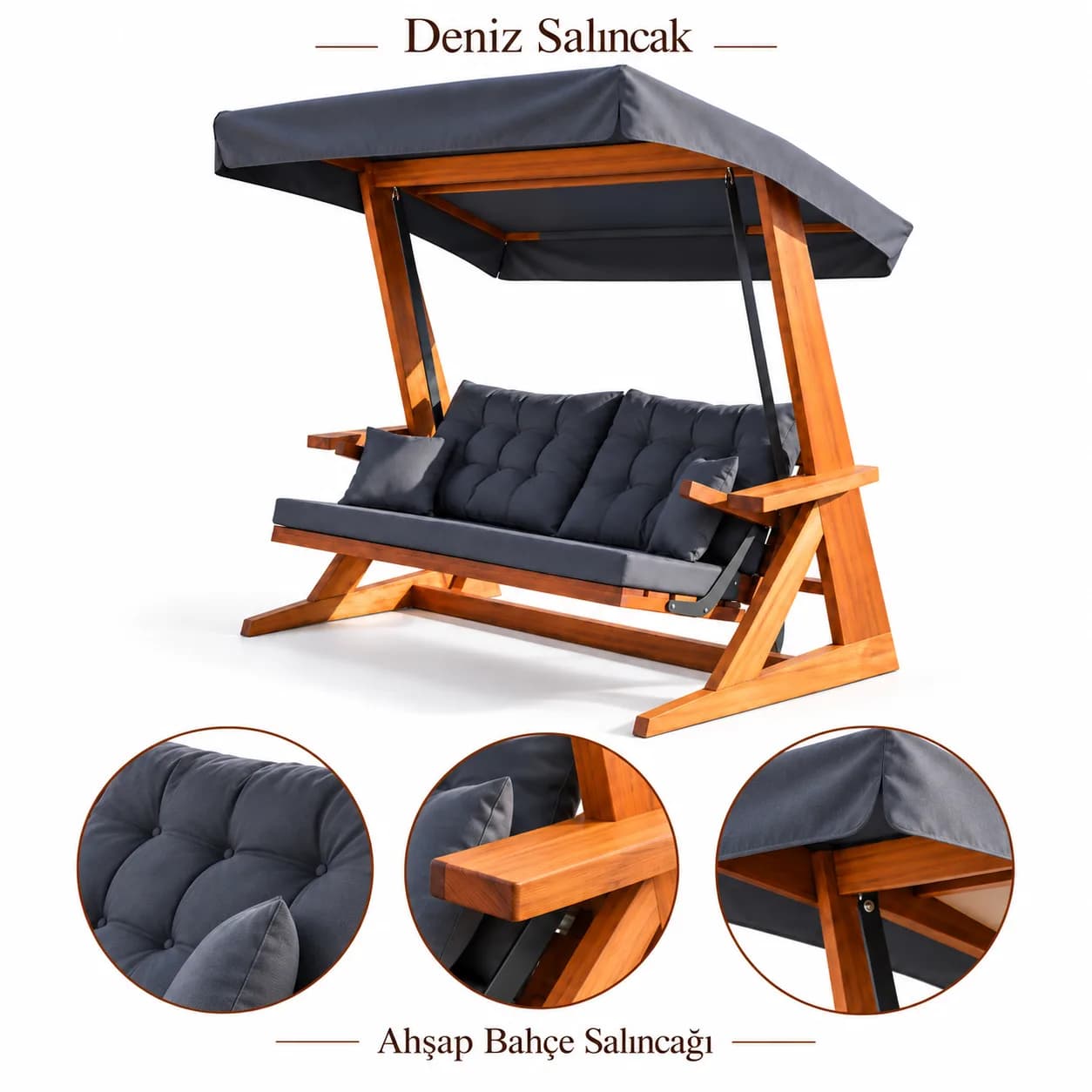
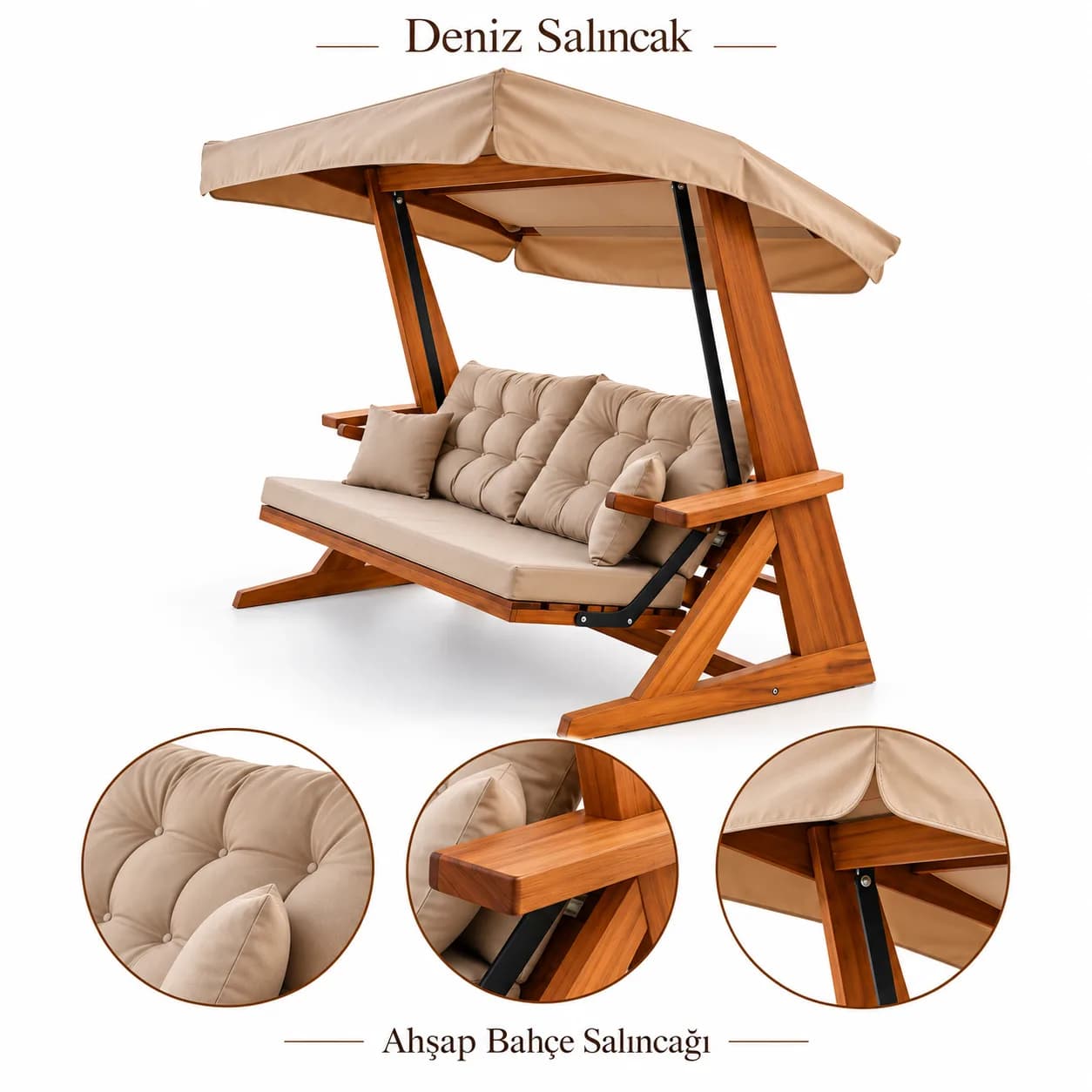
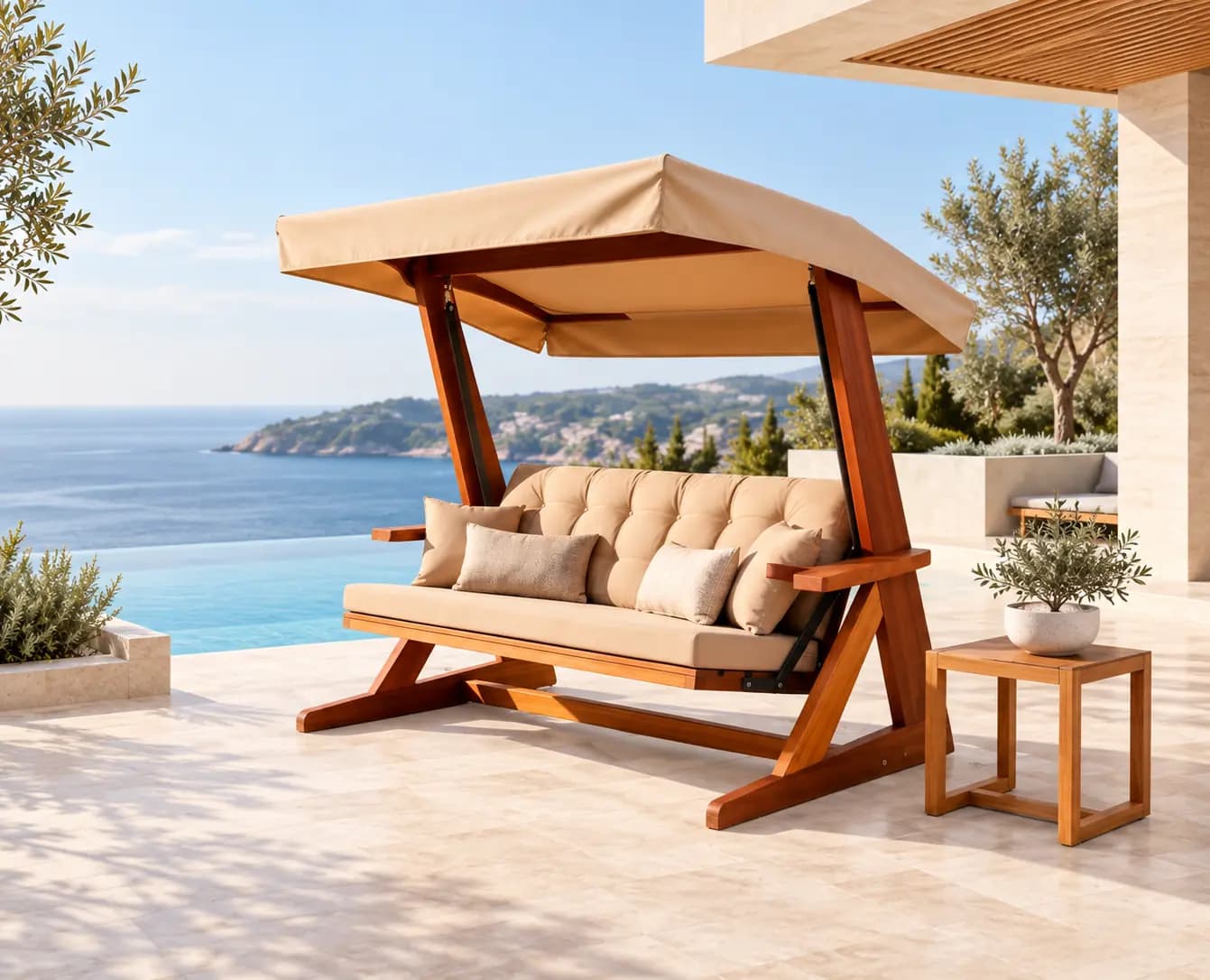
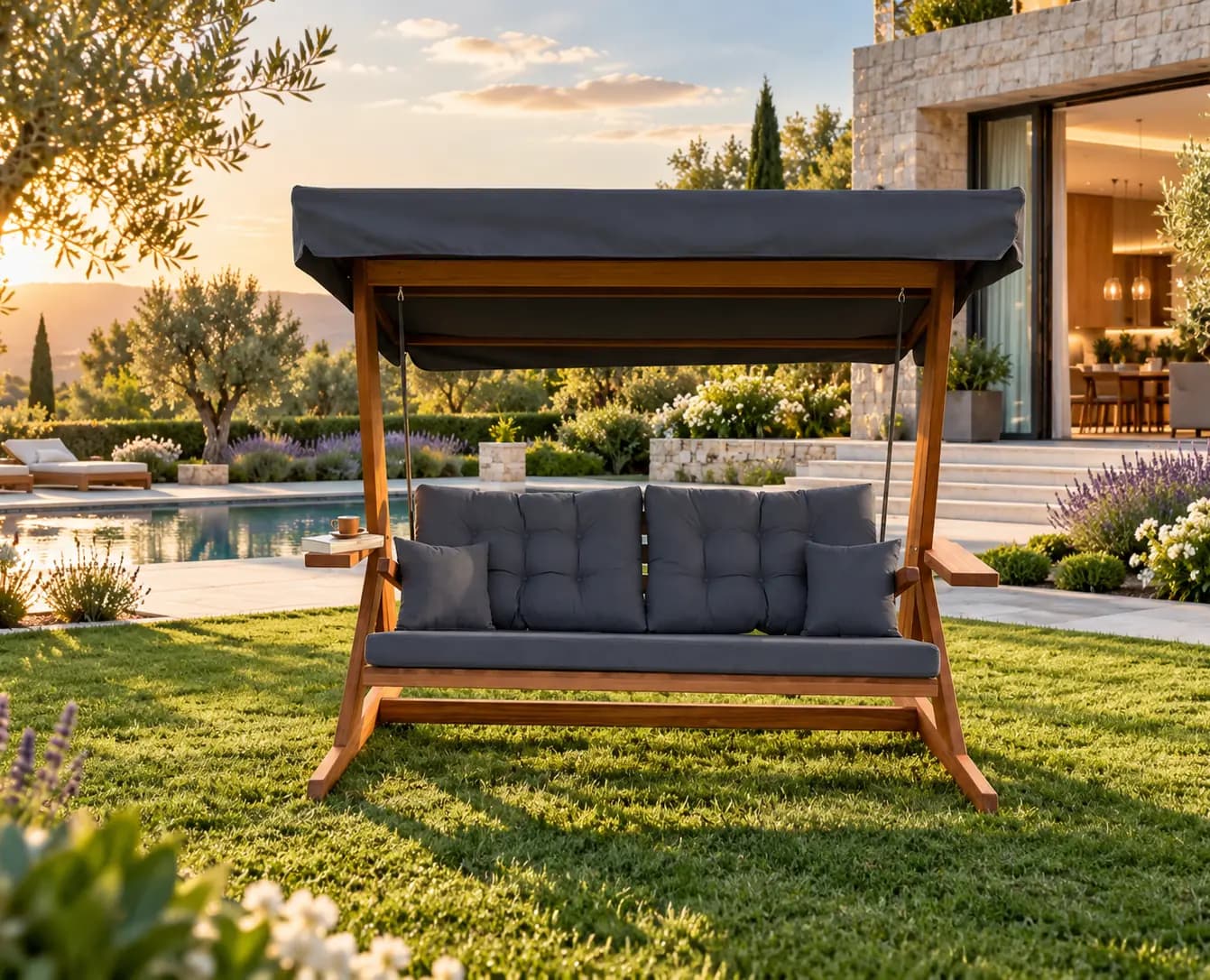
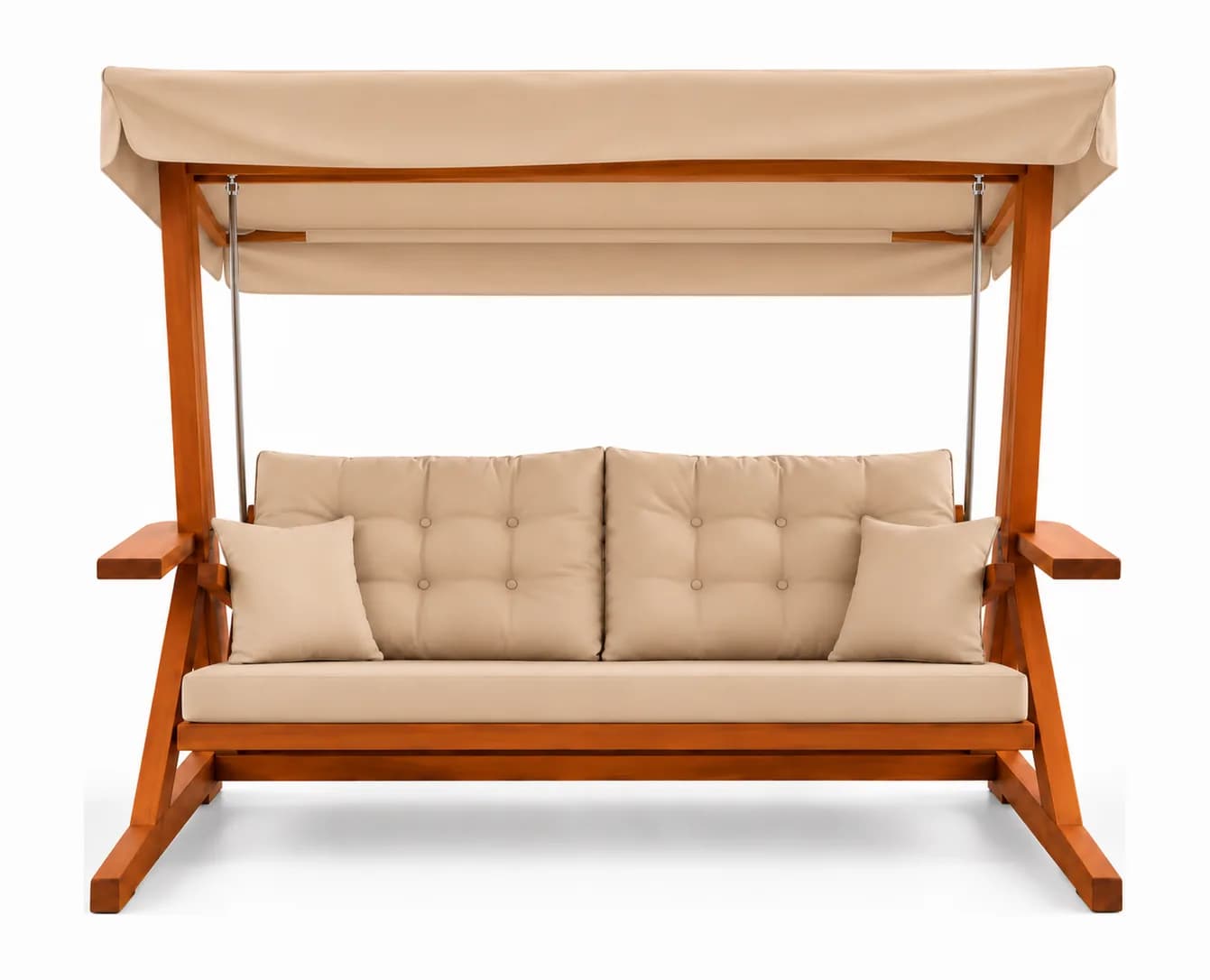
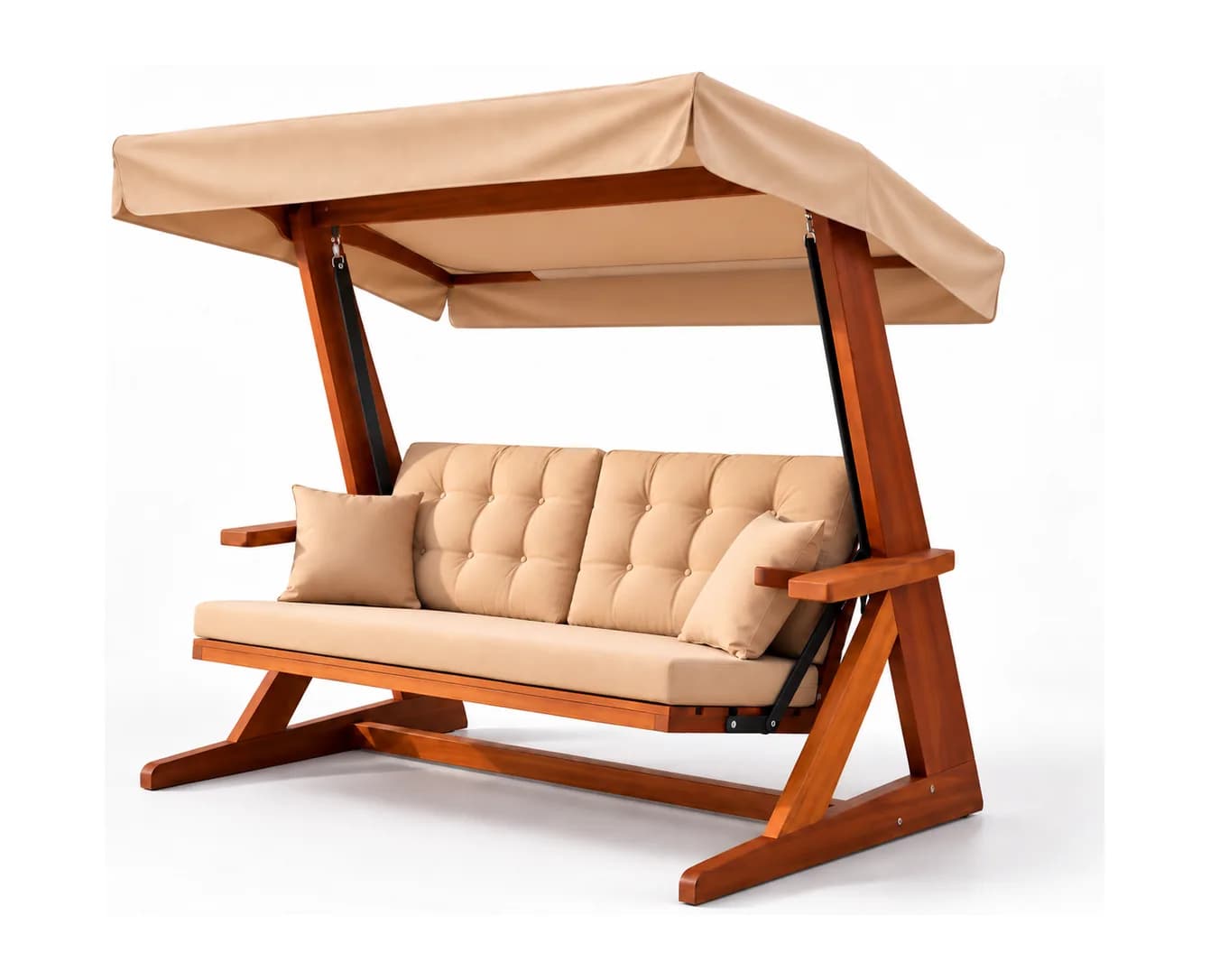
Mihenk 2400 — a selection of garden and studio frames with mustard and anthracite cushions; the product page has every frame and the colour selector.
Frequently asked questions
Iroko vs teak for an outdoor garden swing: which lasts longer?
Teak is the most durable because it has the highest natural oil content, but it costs 3-5 times more. Iroko comes very close to teak in performance thanks to its dimensional stability and EN 350 Class 1-2 durability rating, and it is 30-50% more affordable. Known as "African teak," iroko is dense-grained and also resembles teak in appearance.
What is the best wood for a garden swing?
Teak is the most durable option thanks to its highest natural oil content, but it costs 3-5× more. Iroko is in a similar natural durability class (1-2) and is 30-40% more affordable — in price/performance terms it is the first choice for a garden swing. Acacia offers high hardness but a greater tendency to crack and split outdoors.
Is iroko or teak better?
Teak's natural oil content is higher than iroko's, which is why it is the gold standard for boats and ship decks. Iroko's dimensional stability and durability class are very close to teak's (both Class 1-2). For a garden swing the difference is minimal in practice; iroko + an external teak oil application reaches teak's performance at about half the price.
Does an acacia garden swing last?
It depends on the acacia species: Robinia pseudoacacia (black locust) is very hard and is durability class 1-2. But most products sold as “acacia” in Turkey are lower-density species like Acacia mangium, with an outdoor durability class of 2-3. Their cracking tendency is higher than iroko's and teak's.
Which wood does not crack?
No natural wood is 100% crack-free — the thermal expansion-contraction cycle exists in every wood. To minimise the cracking risk: (1) high-density hardwood (teak, iroko), (2) correct drying (kiln-dried, 8-12% moisture), (3) a penetrating finish (Italian teak oil). When these three come together, a garden swing is used for 10+ years without cracking.
Why is iroko cheaper than teak?
Teak grows for 25-80 years in plantations in Burma and Indonesia; supply is constrained and it is under CITES protection. Iroko grows faster in West Africa (30-40 years commercial harvest age) and its supply is relatively abundant. This natural supply difference shows up in the market as a 30-50% price gap.
Iroko swing.
Natural iroko + Italian teak oil, factory production, a master's final hand finish. Free shipping to 81 provinces, 2-year warranty.
Iroko garden swing models