Garden swing covers: protect it, but let it breathe.
A swing cover is usually bought as winter protection, yet the wrong cover can do more harm than no cover at all. This guide explains when a solid iroko swing actually benefits from a cover, how to judge the fabric and the fit, how to use a cover through winter, and how covering works together with teak oil care.
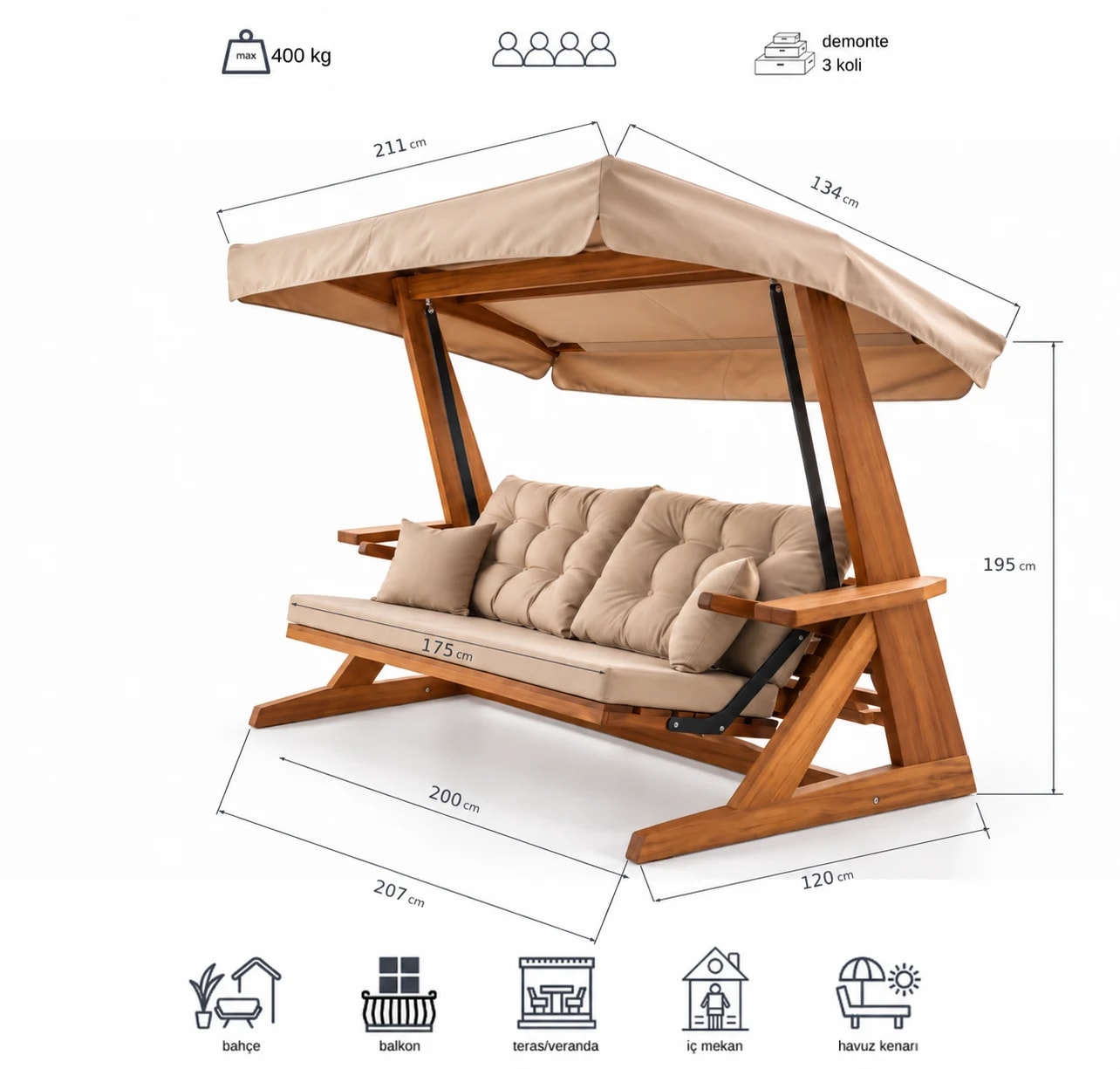
A solid iroko swing gets through winter without a cover; a cover is a choice, not a necessity. If you use one, choose a water-repellent fabric that breathes (vinyl and PVC sheeting trap moisture inside), size it 5-10 cm larger than the frame in every direction and do not tie it tight to the ground: air must get in underneath. After a coat of teak oil, wait at least 48 hours before covering.
Does a solid iroko swing need a cover?
For a swing with a solid iroko frame, a cover is not a necessity. Iroko is rated natural durability class 1-2 under EN 350: it does not swell in rain, crack in frost or struggle under snow. The only change you will see on a swing that winters uncovered is a slightly duller surface in spring, which one coat of oil restores.
What a cover really does is keep dirt and sun off the frame: leaves, pine needles, pollen, dust and bird droppings do not settle on the surface, the oil stays fresh for longer and the move towards a silver patina slows down. That is why a cover is most useful for swings under trees, in holiday homes that stand empty for months, and in gardens nobody uses in winter.
Cushions are a separate matter. A cover does not replace bringing them in: through winter, the cushions and the canopy fabric are stored somewhere closed and dry. Cushions left under a cover meet moisture and condensation, however good the cover is.
Cover fabric: water-repellent, but breathable
The most common mistake is choosing a completely waterproof material. Vinyl, PVC or polyethylene sheeting keeps the rain out, but it also keeps water vapour in: under a cover that warms by day and cools at night, condensation forms, and the wood and fixings stay damp for weeks. The result is a musty smell, black spots on the surface and rust on the hardware.
The right cover repels water but breathes. PU-coated polyester covers with air vents are the middle ground; solution-dyed acrylic or olefin covers repel water, breathe and resist fading in the sun. It is the same logic as choosing cushion fabric: look at whether the colour and the protection are in the fibre or only on the surface.
Workmanship matters as much as the fabric: are the seams taped, the corners reinforced, and are there tie-down points? A cover that flaps in the wind all winter wears out both itself and the surface of the wood.
The right size: 5-10 cm of allowance
Measure the swing at its widest, deepest and highest points and add 5-10 cm to each figure. Our frame sizes (width × depth × height) are: Mihenk 2400 211 × 134 × 195 cm, Lavinya 2100 195 × 132 × 195 cm, Almila 2800 250 × 138 × 200 cm. With the canopy fitted, the height is the top of the canopy.
Covers sold as "3 seater swing covers" are usually cut for swings 170-200 cm wide. The 211 cm Mihenk 2400 seats three comfortably but will not fit them; choose a cover by centimetres, not by the number of seats.
The cover should not touch the ground. A gap of 10-15 cm lets air in from below and stops rain splashing up inside. A drawcord or elastic hem should hold the cover in place in the wind without sealing the frame like a bag.
Covers in winter: moisture, snow and wind
Put the cover on a dry frame on a dry day. A swing covered straight after rain locks its moisture in under the cover. Waiting for one or two sunny days protects the wood more than the cover itself.
Once a month through winter, on a dry day, lift the cover and air the frame; remove leaves that have collected underneath and check for condensation. If snow or water pools on top of the cover, brush it off gently; the aim is to protect the cover, since the frame carries that load easily.
In gardens exposed to wind, secure the cover at its tie-down points. The rest of the winter routine is short: cushions and canopy fabric indoors, the frame brushed clean, the fixings checked once.
Can you use teak oil on iroko? Care alongside a cover
Yes. Teak oil is the right care product for iroko. Iroko contains less natural oil than teak, which is why our swings receive three coats of Italian teak oil at the factory and why we recommend one thin coat a year.
Read the label when you choose an oil: a tung and linseed based, UV-stabilised, silicone-free formula soaks into the wood. Cheap paraffin or mineral-oil "wood oils" stay on the surface and soon evaporate. On the day you oil, the surface should be clean and dry, the temperature above 10°C and no rain forecast; apply a thin coat along the grain and wipe off whatever the wood does not absorb.
This is where the cover comes in: freshly oiled wood should stay away from water for at least 48 hours and should not be covered in that time, because a cover laid on wet oil sticks to the surface and traps moisture. The natural order is to lift the cover in spring, clean the surface, oil it, and use the cover only when needed once the oil has dried. Rags soaked in linseed oil can ignite on their own; after use, soak them in water or lay them flat outdoors to dry.
Finding a cover that fits your model
If you are unsure about a measurement, such as the height of the canopy or how far the armrests project, just tell us the name of your model and we will work out the size and the fabric with you.
Questions about oil, cushion covers and spare parts come to the maker through the same channel. You can write to us about covers on WhatsApp.
Three cover materials side by side
The deciding question is whether the cover keeps out only water, or water vapour too.
| Material | Rain | Breathability | Sun resistance | Winter risk |
|---|---|---|---|---|
| Vinyl / PVC / PE sheeting | Waterproof | None | Low to medium; stiffens and cracks | Condensation, mould, black spots, rusting hardware |
| PU-coated polyester (vented) | Repels | Limited; through the vents | Medium | Condensation if there are no vents |
| Solution-dyed acrylic / olefin | Repels | Yes | High | Low; moisture still trapped if fitted over a wet frame |
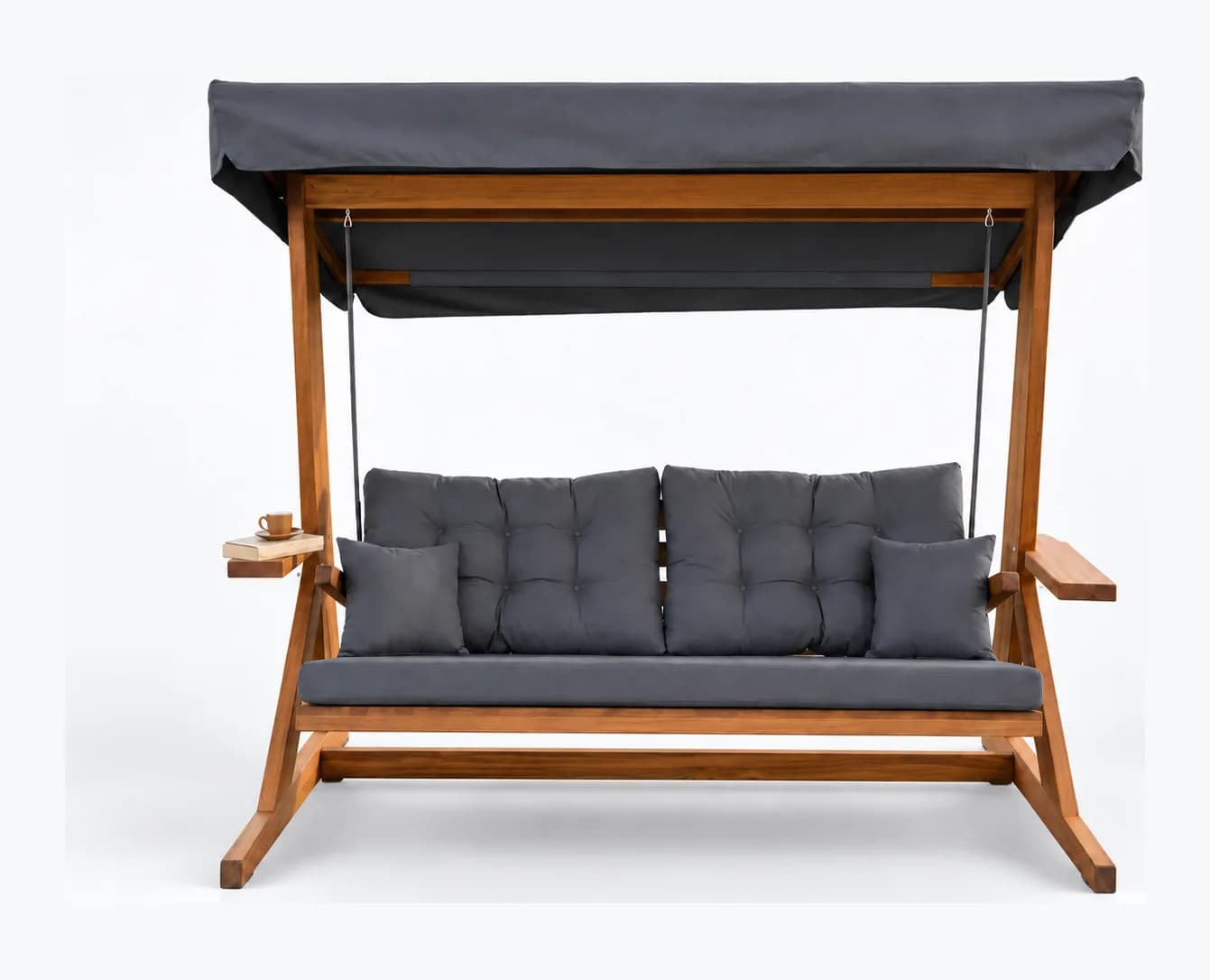
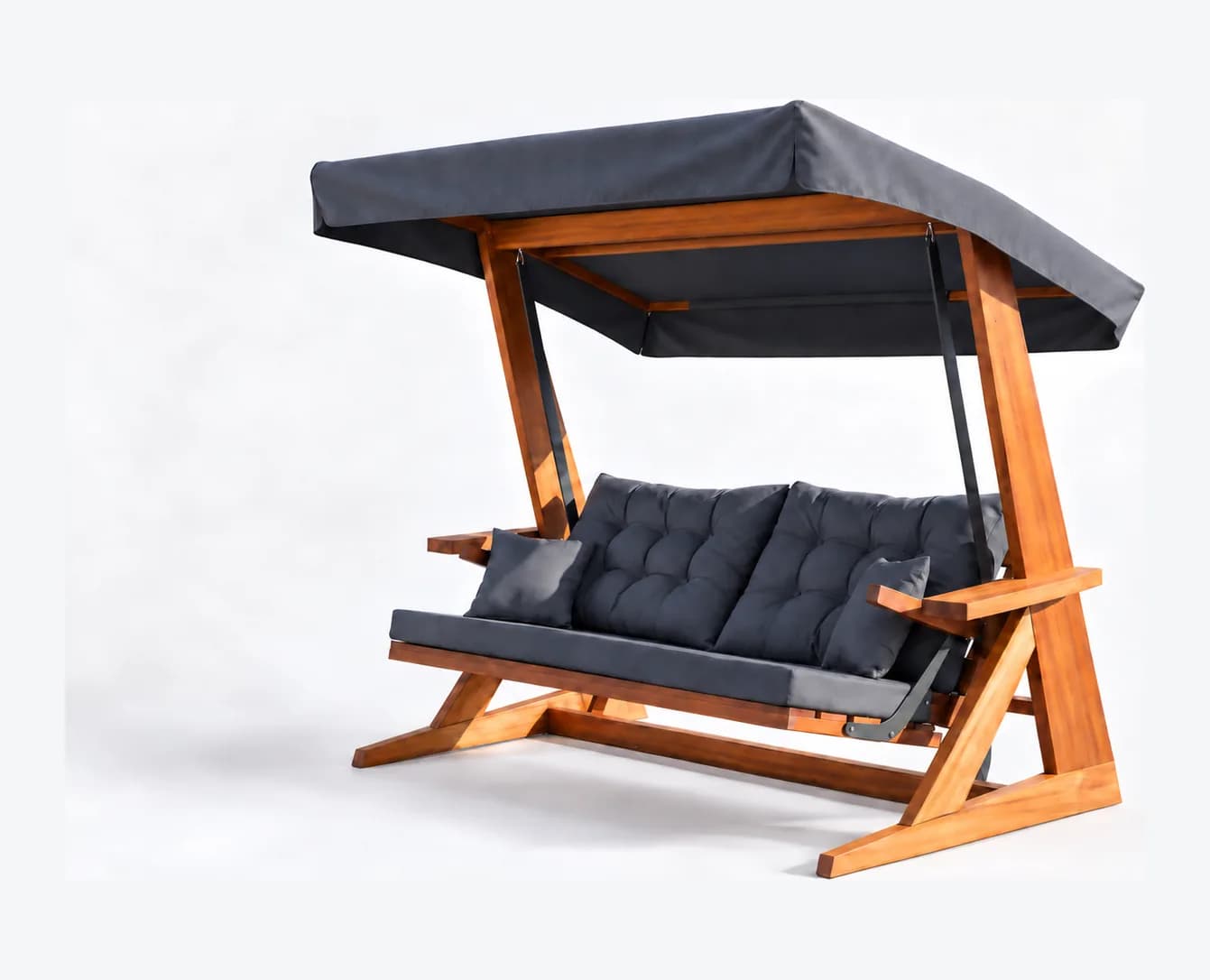
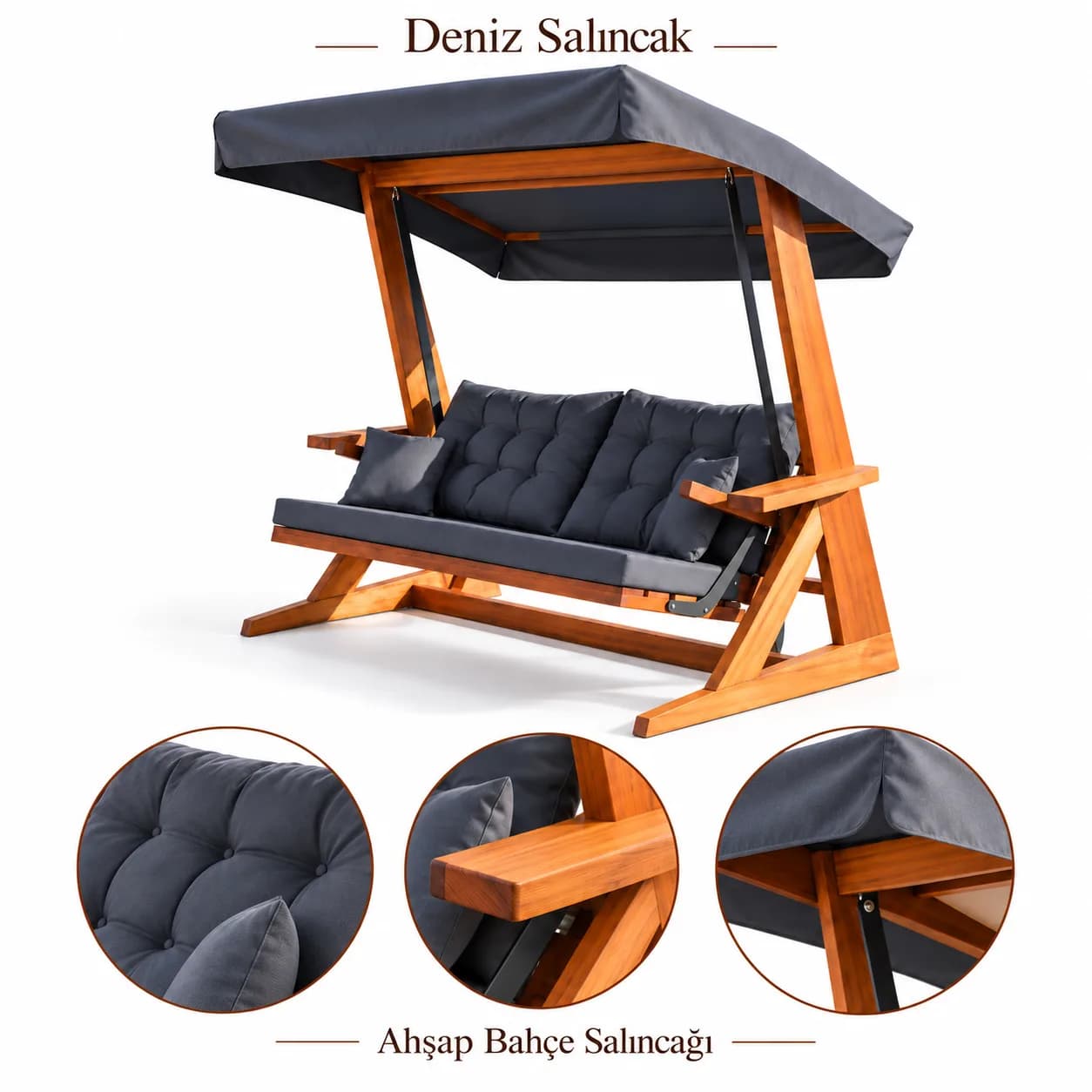
Solid Iroko, in the garden and in the studio.
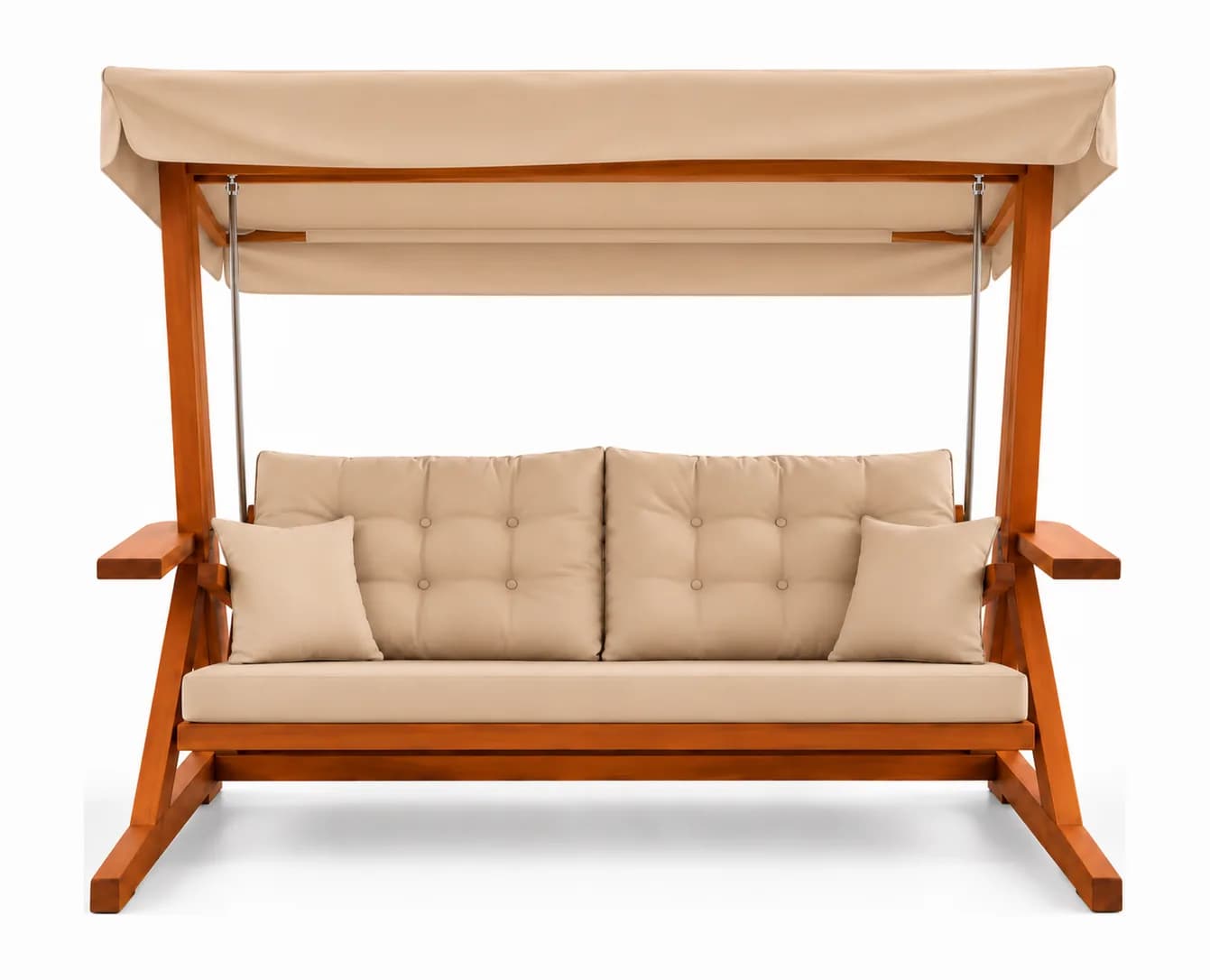
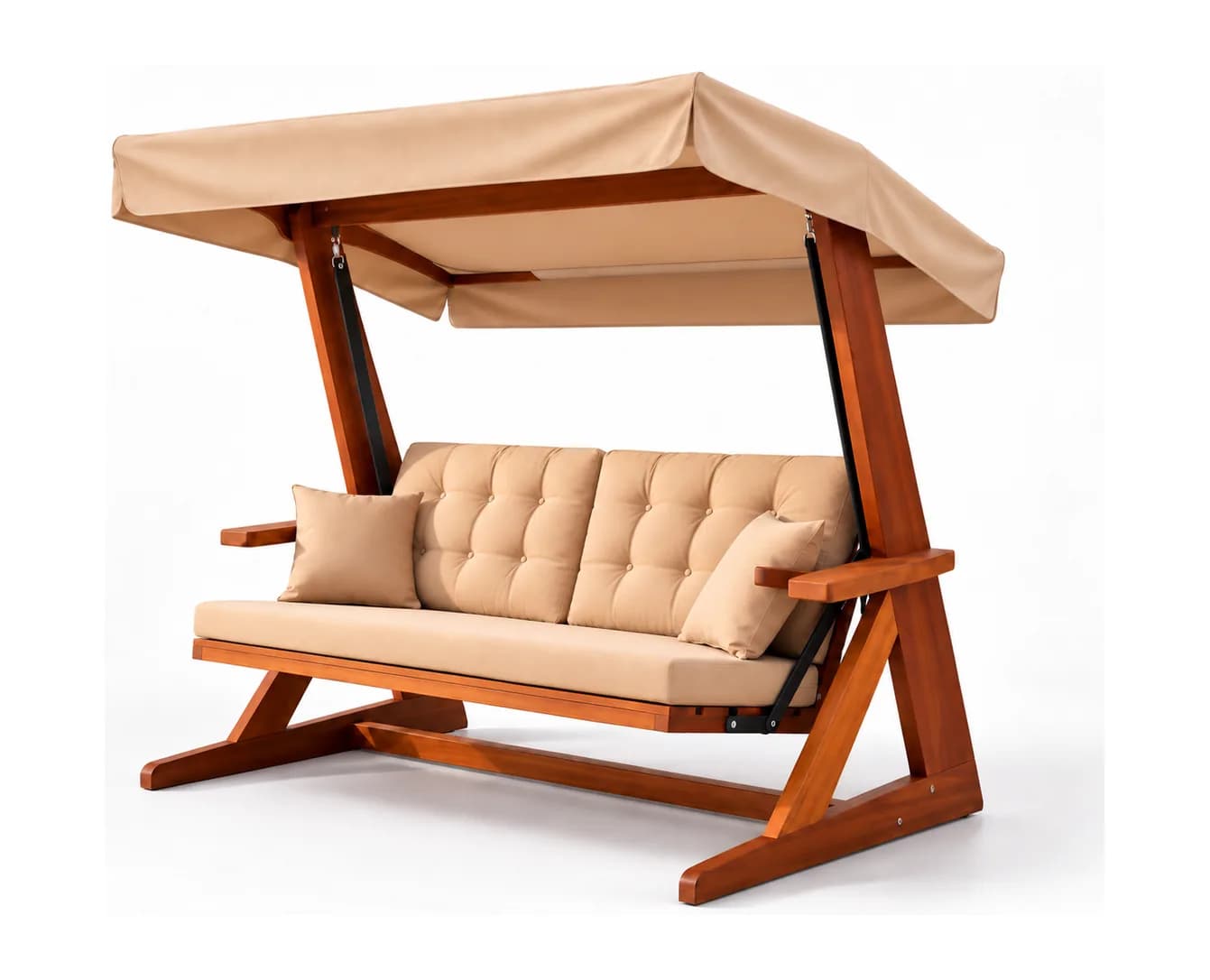
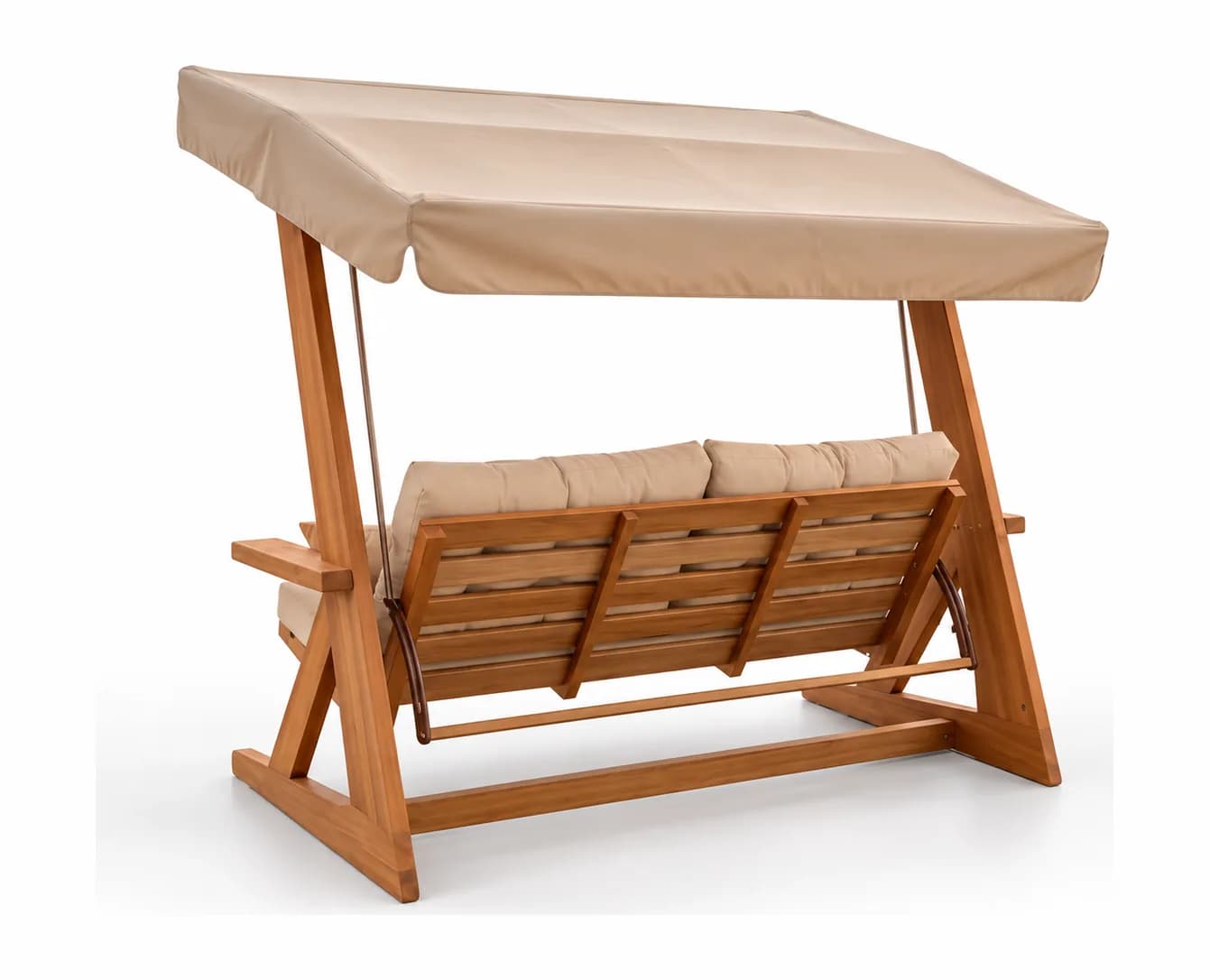
Mihenk 2400 — a selection of garden and studio frames with mustard and anthracite cushions; the product page has every frame and the colour selector.
Frequently asked questions about swing covers
Does a garden swing need a cover?
A solid iroko swing does not need one; the frame gets through winter uncovered. A cover keeps leaves, pollen, dust and bird droppings off and makes the oil last longer. It is most useful for swings under trees or ones that stand unused for long periods.
What fabric should a swing cover be made of?
A water-repellent fabric that breathes: solution-dyed acrylic or olefin, or PU-coated polyester with air vents. Vinyl, PVC or polyethylene sheeting keeps water vapour in and causes condensation and mould.
How do I measure for a swing cover?
Measure the frame at its widest, deepest and highest points and add 5-10 cm to each. The frame of the Mihenk 2400 is 211 × 134 × 195 cm, the Lavinya 2100 195 × 132 × 195 cm and the Almila 2800 250 × 138 × 200 cm.
Will a 3 seater swing cover fit any swing?
No. Covers sold under that name are usually cut for widths of 170-200 cm. The 211 cm Mihenk 2400 seats three comfortably but will not fit them; choose the cover by centimetres.
Can I use teak oil on iroko?
Yes. Teak oil is the right care for iroko. Choose a tung and linseed based, silicone-free formula; apply one thin coat a year on a dry day above 10°C.
How long after oiling can I cover the swing?
At least 48 hours. In that time the surface should not get wet or be covered; a cover laid over wet oil sticks to the surface and traps moisture.
Is a swing cushion cover the same as a swing cover?
No. The cushion cover is the cushion's own zipped outer fabric and can be washed at 30°C. A swing cover is a protective cover over the whole frame. In winter the cushions are stored indoors, not left under the cover.
Ask the maker for your size.
Write your question about cover size, the canopy or teak oil care on WhatsApp, and speak directly with the maker.
Write on WhatsApp