What Is Iroko Wood?
We build our swing frames from a single material: iroko. It is also the question our customers ask most — 'what kind of wood is iroko?' This guide answers without marketing language: botanical origin, measurable technical properties, and an outdoor track record spanning more than half a century.
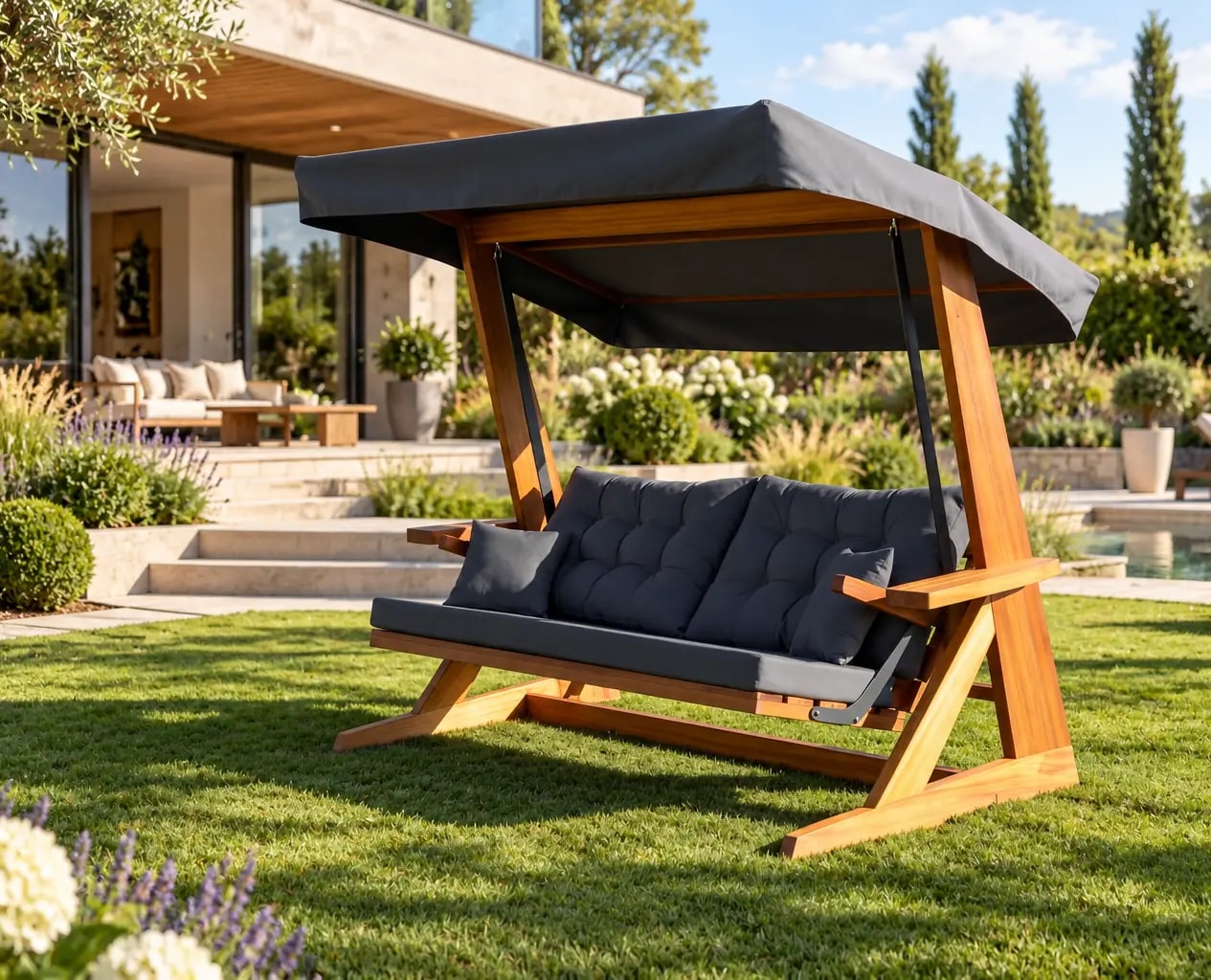
Iroko (Milicia excelsa) is a hardwood native to the tropical belt of West and Central Africa. With a density of ~660 kg/m³ and EN 350 Class 1-2 natural durability, it lasts for decades outdoors without chemical treatment. It shares teak's service class — hence the name 'African teak' — and is the classic material of boat decks, piers and laboratory benches. That is exactly why we chose it for garden swings: a material that outlives the product.
1. Origin and Botany: Africa's 'Iron Tree'
Iroko's scientific name is Milicia excelsa (Chlorophora excelsa in older literature). It grows naturally across the tropical belt from Sierra Leone to Tanzania — notably Ghana, Ivory Coast, Cameroon and the Congo basin. Mature trees reach 30-50 metres; the branch-free trunk can exceed 20 metres, which means long, knot-free timber.
Local African names include 'odum' and 'mvule'; European trade has known it as iroko for over a century. Its maritime reputation is practical:
- Boat decks: Alongside teak, one of the two most trusted woods under salt water and constant sun.
- Piers and dock decking: One of the rare species used untreated in structures half-submerged in water.
- Laboratory benches: Its resistance to acids and chemicals made it the standard school and lab bench material throughout the 20th century.
A material's true reference is not a lab report but its record. Iroko's record: century-old piers, boats still afloat, benches still in use.
2. Technical Properties: Iroko in Numbers
Three measures matter in outdoor timber: density (impact and wear resistance), natural durability class (untreated resistance to decay) and dimensional stability (movement across humidity cycles). Iroko sits in the top band of all three:
- Density ~660 kg/m³: Well above Scots pine (~520), practically equal to teak (~655). Excellent screw-holding and impact resistance.
- Janka hardness ~1190 lbf (~5300 N): Everyday scratches and pet claws struggle to mark the surface.
- EN 350 natural durability Class 1-2: The top durability band — no preservative chemicals needed against fungi and insects.
- Mineral deposits (calcium carbonate): Some logs contain hard white deposits of calcium carbonate. They have no effect for the user but blunt cutting edges, which is why iroko is machined with carbide tooling and experience.
- Low movement coefficient: Properly dried iroko moves about as little as teak and noticeably less than oak across humidity cycles — low risk of cracks and gaps in wide panels.
In practice these numbers mean: a properly dried, properly finished iroko frame keeps its structural life in the 25-50 year band in every climate in Turkey.
3. Iroko Outdoors: Sun, Rain, Patina
For a species that evolved under equatorial sun, the Turkish climate is not a challenge. Still, we like to describe its outdoor behaviour plainly, in three points:
- UV behaviour: Iroko does not degrade structurally in sunlight; left unprotected, the surface colour weathers to a silver-grey patina over time. That is not damage but a cosmetic choice — the grey decks of teak yachts are the same phenomenon.
- Water and humidity: The dense fibre structure does not hold water at the surface; with the right finish (a penetrating oil that leaves no film) the wood breathes — no mould, no swelling.
- Finish choice: We use Italian teak oil: it penetrates the wood, is refreshed with a brush once a year, and never needs stripping. Our varnish-versus-oil guide covers the comparison in detail.
In short: outdoors, iroko needs not 'maintenance' but one afternoon of refreshing per year. The material handles the rest itself.
4. Working With Iroko: Grain, Dust and Sourcing
Iroko is not a difficult timber, but it has three traits every buyer and maker should know. We describe them as they are, with the reference data we use (The Wood Database):
- Interlocked grain: The fibres run in alternating directions, so planing against the grain can tear the surface. Sharp tools and a low cutting angle prevent it; once sanded, the surface is smooth, and iroko glues and takes oil well.
- Calcium carbonate deposits: Some logs contain hard white mineral deposits. They have no effect for the user, but they blunt saw blades and cutters — which is why iroko is machined with carbide tooling.
- Dust: As with many hardwoods, fine iroko dust can irritate the eyes, skin and airways, and some people become sensitised to it. This applies only to cutting and sanding in the workshop; a finished, oiled swing gives off no dust.
- Colour: The heartwood ranges from yellow to golden brown and darkens over time; the pale sapwood is clearly separated from the heartwood.
- Sourcing and status: Iroko is not listed in the CITES appendices. On the IUCN Red List, Milicia excelsa is Near Threatened and Milicia regia Vulnerable. That is why the timber should come from traceable, legal supply chains.
None of these traits affect the finished swing: interlocked grain and mineral deposits are a problem for the saw, not for the garden.
Iroko's identity card
| Property | Value | What it means outdoors |
|---|---|---|
| Scientific name | Milicia excelsa | Also listed as Chlorophora excelsa in older literature |
| Origin | West/Central African tropics | Evolutionary adaptation to high UV and humidity |
| Density | ~660 kg/m³ | Impact resistance + screw-holding; same band as teak |
| Janka hardness | ~1190 lbf | Resists everyday scratches and wear |
| Natural durability | EN 350 Class 1-2 | 25-50 years outdoors without preservatives |
| Mineral deposits | Calcium carbonate (in some logs) | Blunts cutters; no effect on the finished piece |
| Movement (humidity cycle) | Low | Low crack/gap risk in wide panels |
| Recommended finish | Penetrating oil (Italian teak oil) | Annual refresh, no stripping |
| Shrinkage (green to oven-dry) | Radial 3.3% · tangential 4.8% | Low movement: little risk of cracks or gaps in wide surfaces |
| Bending strength (MOR) | ≈97 MPa | High strength for load-bearing frame parts |
| Conservation status | IUCN: Near Threatened · CITES: not listed | Legal, traceable sourcing matters |
Why we build the swing from iroko
A garden swing is the toughest scenario in outdoor furniture: it stays outside permanently, carries dynamic loads, and its frame works under human weight every day. In this scenario, saving on material means saving on the product itself.
Choosing iroko is not romantic — it is an engineering decision: teak-class durability, more accessible cost than teak, and a proven open-air record. We build the frame from solid iroko, finish it with Italian teak oil and deliver with a 2-year warranty — the material's real life is far longer than the warranty.
If you would like to see iroko side by side with teak and acacia before deciding, our comparison guide exists precisely for that.
Solid Iroko, in the garden and in the studio.
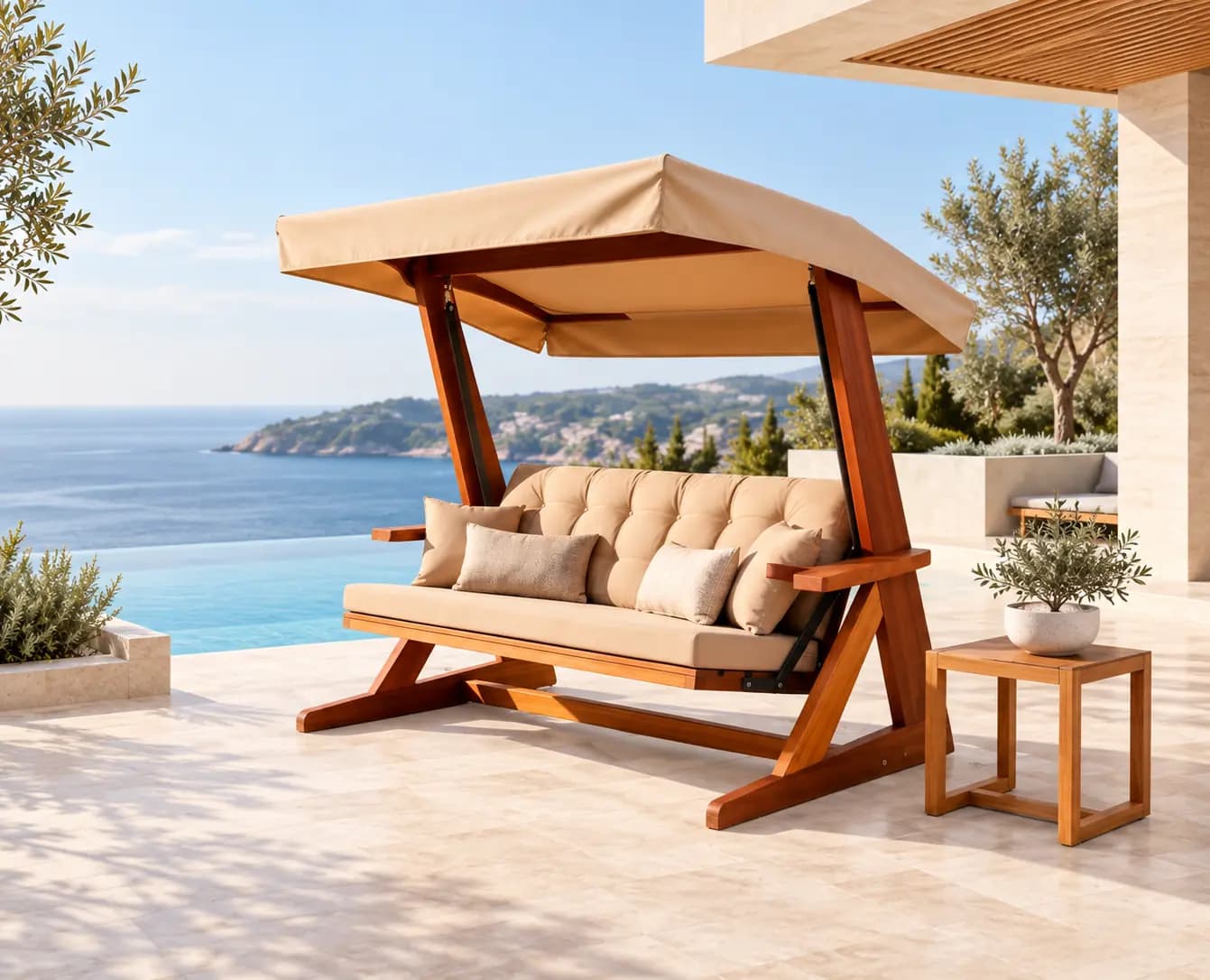
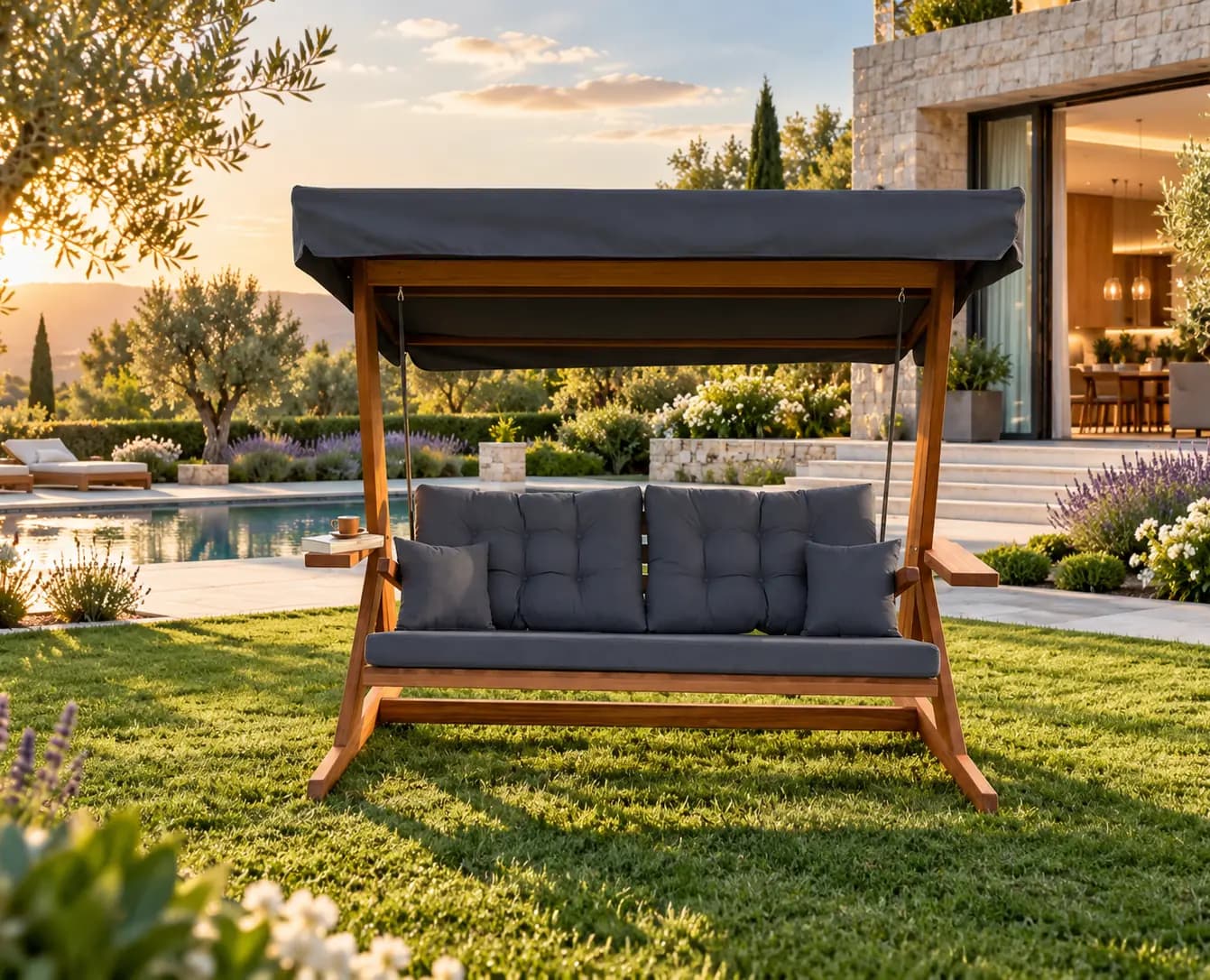
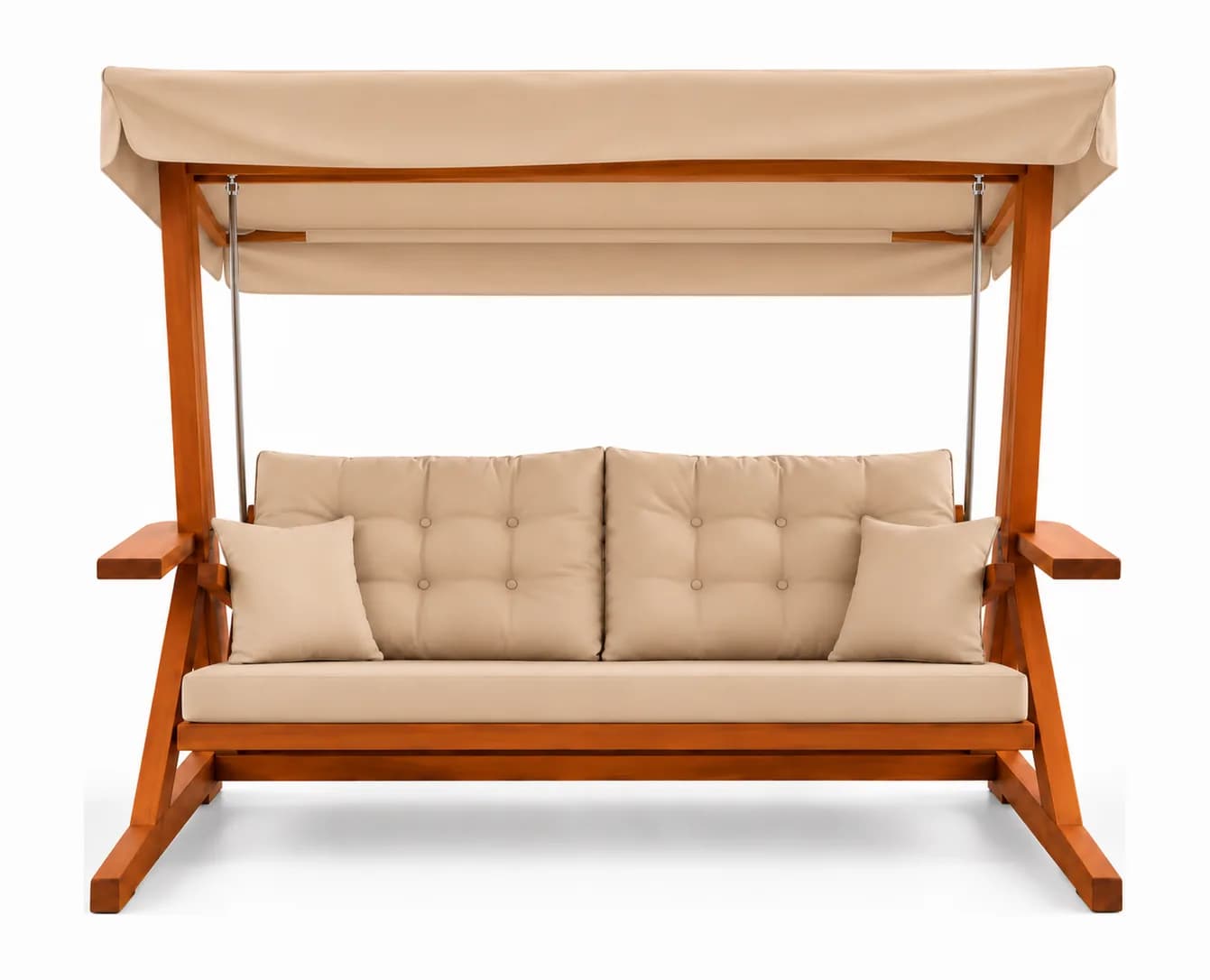
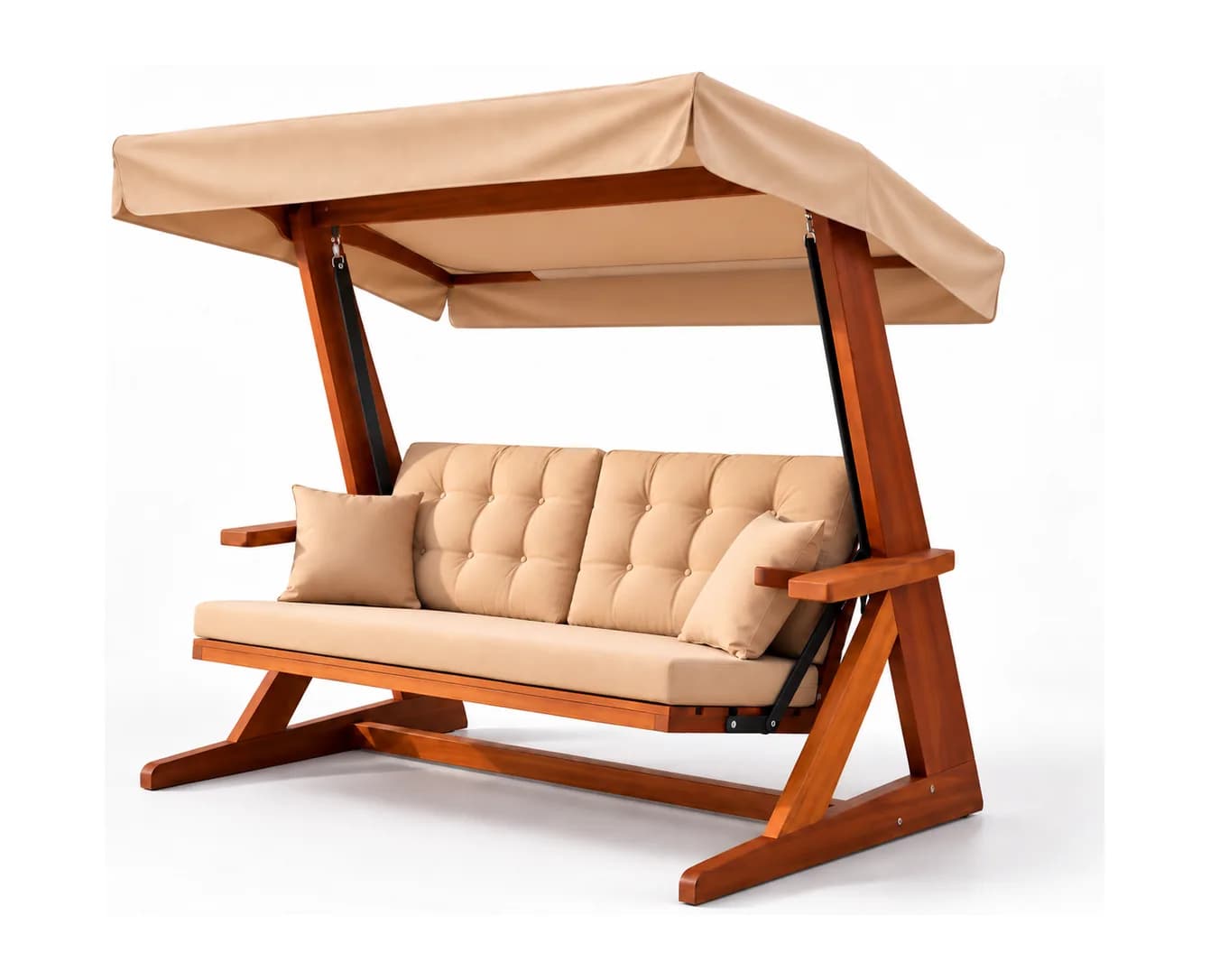
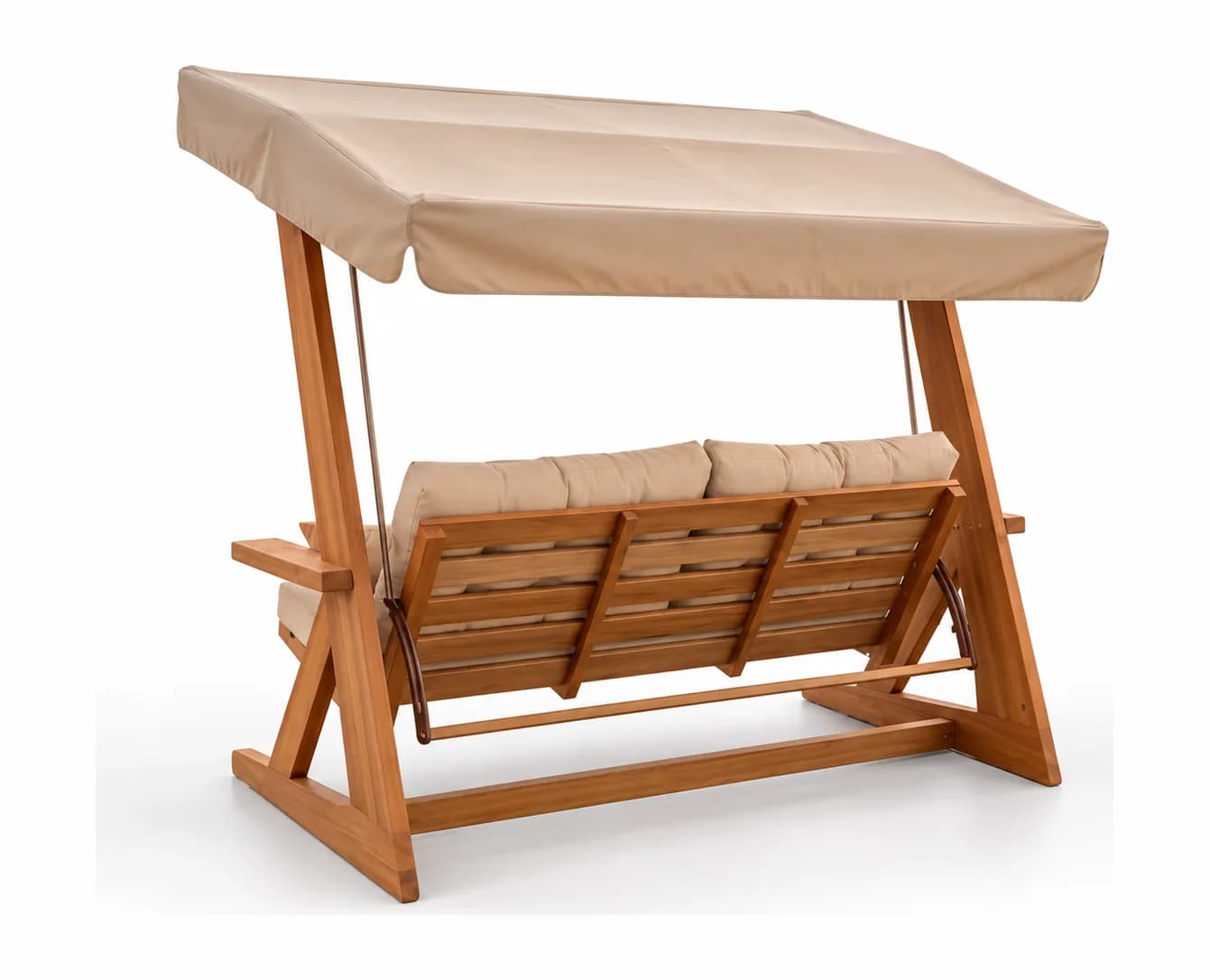
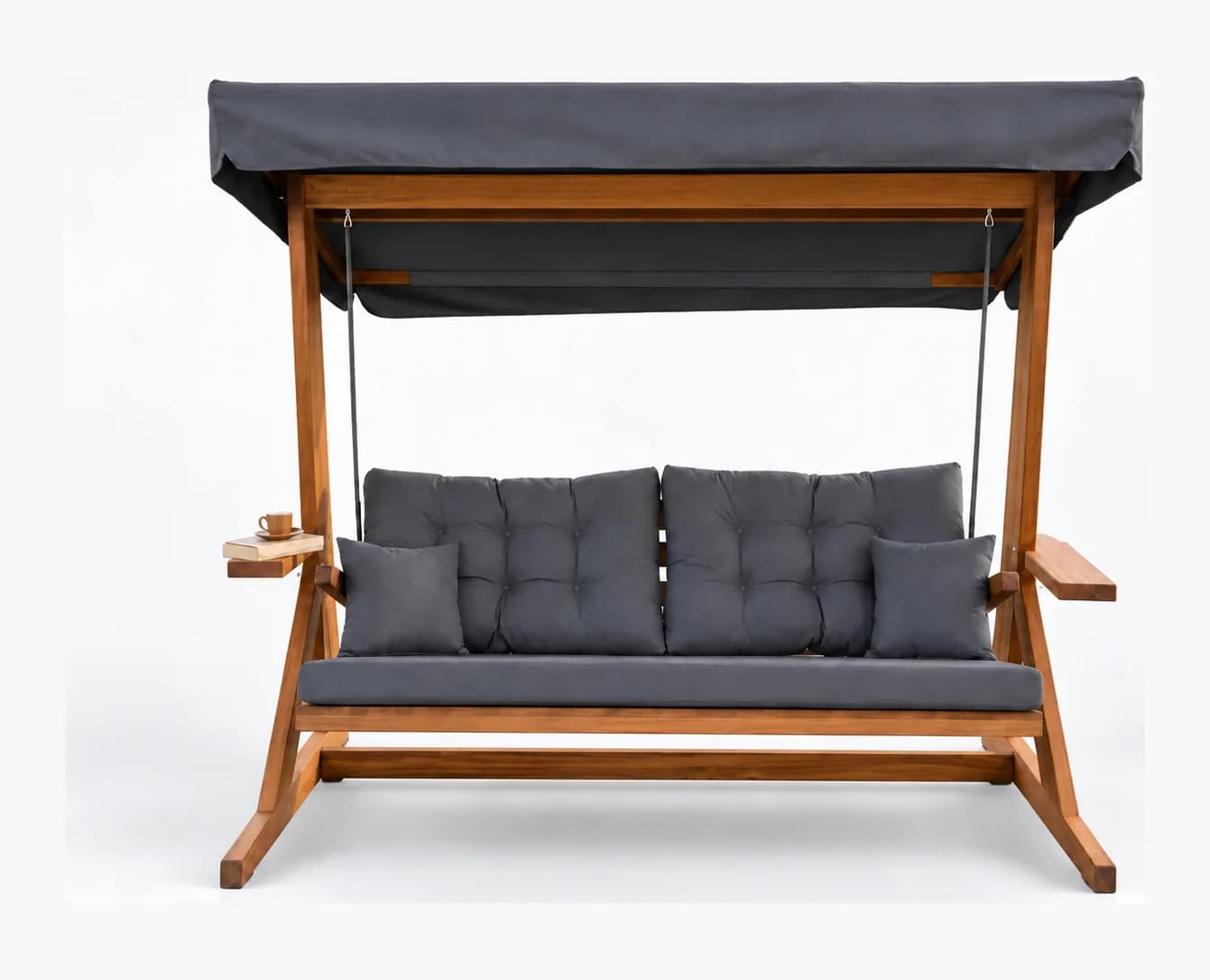
Mihenk 2400 — a selection of garden and studio frames with mustard and anthracite cushions; the product page has every frame and the colour selector.
Frequently asked questions
Where does iroko grow?
Iroko (Milicia excelsa) grows in the tropical belt of West and Central Africa: mainly Ghana, Ivory Coast, Cameroon, Nigeria and the Congo basin. Reaching 30-50 metres, the tree yields wide-section timber thanks to its long, knot-free trunk.
What is the difference between iroko and teak?
Both sit in the top EN 350 durability band with similar density (~655-660 kg/m³). Teak has slightly more natural oil; iroko is notably more affordable and its high density makes it highly wear-resistant — hence 'African teak'. See our Iroko vs Teak vs Acacia guide for details.
How long does iroko last outdoors?
Properly dried and finished with a penetrating oil, iroko offers a 25-50 year outdoor life without preservatives (EN 350 Class 1-2). The only annual care is refreshing the Italian teak oil with a brush.
Does iroko change colour over time?
Left unprotected in the sun, the surface weathers from golden brown to a silver-grey patina; this is cosmetic, not structural. An annual teak-oil refresh preserves the natural golden-brown tone.
Is an iroko swing hard to maintain?
No. Since there is no surface film, no sanding or stripping is needed; one annual application of Italian teak oil with a brush (2-3 hours of work) is enough. Season-by-season steps are covered in our Maintenance Calendar guide.
How many years does an Iroko garden swing last?
A solid Iroko frame with one coat of Italian teak oil a year is built for a life expectancy of more than 20-25 years; the wood's high natural oil content resists rot without pressure treatment. Cushions and canopy have a shorter life and are renewed as spare parts.
Is iroko wood toxic or bad for allergies?
Severe reactions are uncommon, but like many hardwoods, fine iroko dust can irritate the eyes, skin and airways and can sensitise some people. This applies only while cutting and sanding. A finished, oiled iroko swing gives off no dust and poses no risk in use.
Is iroko endangered?
Iroko is not listed in the CITES appendices, so its international trade is neither banned nor under quota. On the IUCN Red List, Milicia excelsa is classified as Near Threatened. That is why it matters that the timber comes from legal, traceable supply chains.
You have seen the material. Now the models.
Solid iroko frame + Italian teak oil finish. Mihenk, Lavinya and Almila — three models, one material discipline. Free delivery across Turkey, 2-year warranty.
Explore iroko swing models